
The dominant narrative of European leaders regarding the war in Ukraine, which began in 2014, is biased as it serves a geopolitical rather than a scientific objective.
In doing so, it obscures crucial internal dynamics and, in a way, manipulates history—that is, what actually happened.
The events of August 31, 2015, at the Verkhovna Rada, Ukraine’s parliament, where ultranationalist groups played a decisive role in the failure of the Minsk Agreements, which were essential for de-escalating the conflict in Donbas, illustrate how Ukrainian ultranationalism destroyed any chance of peace.
On that day, the Ukrainian parliament adopted, in its first reading, a draft law on decentralization, a requirement stemming from the Minsk II Agreements signed in February 2015.
This bill, proposed by President Petro Poroshenko, aimed to grant limited autonomy to the Donbas territories, in line with international commitments to establish a lasting ceasefire and a political solution to the conflict.
However, this initiative faced fierce opposition from two ultranationalist parties: Oleh Lyashko’s Radical Party (22 deputies) and Svoboda (6 deputies).
Together, these parties represented less than 7% of the 423 seats actually occupied in the Rada in 2015, but their influence was disproportionate.
On August 31, as the bill passed its first reading with 265 votes in favor, violent protests erupted outside the parliament.
Ultranationalist activists, particularly those affiliated with Svoboda, orchestrated chaotic and violent actions to pressure parliamentarians and prevent the bill’s final adoption, which required a qualified majority of 300 votes to be enshrined in the Constitution.

In the chaos, a grenade thrown into the crowd by a protester, identified as a member of Svoboda, exploded among law enforcement officers, killing three National Guard members and injuring over 140 people, including protesters and officers.
The images below show bloodied soldiers being dragged out of the chaotic area and plainclothes officers being urgently evacuated.
These acts of violence marked a decisive turning point, transforming a legislative debate into a tragedy.
President Poroshenko described these actions as a “stab in the back” of Ukraine, denouncing an “anti-Ukrainian” act that should be severely punished.
Prime Minister Arseniy Yatsenyuk (chosen by Victoria Nuland before the Maidan coup) went even further, accusing the ultranationalists of being “worse” than the Russia-backed separatists due to their intent to destabilize the country under the guise of patriotism.
Despite international condemnation of the violence, including from the United States, Germany, Russia, and the European Union, and an appeal from European Council President Donald Tusk to implement the bill before the end of 2015, no effective pressure was exerted on Kyiv to see the Minsk Agreements through.
As a result, the decentralization bill was never adopted, and the conflict became entrenched.
This episode is just one example among many of the outsized and harmful influence of ultranationalist groups in Ukraine.
Although they represented less than 7% of parliamentarians, their ability to carry out violent actions and their aggressive rhetoric gave them political weight far beyond their parliamentary representation.
This phenomenon was the result of explicit or implicit support from certain Western actors, particularly American neoconservative figures such as Victoria Nuland, then Under Secretary of State, or Senator John McCain, who openly displayed their alignment with Ukrainian nationalist movements in the context of the confrontation with Russia.

This tacit alliance between Ukrainian ultranationalists, driven by an ethnonationalist ideology—far removed from the inclusive nationalism advocated by Ernest Renan—and Anglo-American geopolitical interests has contributed to the current disaster.
Far from promoting lasting peace, this dynamic exacerbated internal and external tensions, undermining the reconciliation efforts outlined in the Minsk Agreements.
European leaders, by turning a blind eye to the intransigence of these groups and adopting a simplistic narrative that attributes near-exclusive responsibility for the conflict to Russia, have failed in their duty of clarity and responsibility.
In this regard, the book by Benoit Paré, an OSCE observer, confirms Western hypocrisy in the Ukrainian conflict and highlights this duplicity.
This double standard has not only hindered a peaceful resolution of the conflict but has also contributed to the Ukrainian tragedy.
In conclusion, the deliberate obscuring of the ultranationalists’ role in the failure of the Minsk Agreements, exemplified by the tragedy of August 31, 2015, and the inability of European leaders to confront this reality reveal a willingness to conceal the less glorious aspects of the story.
This voluntary or unconscious omission distorts the understanding of the Ukrainian conflict and underscores the need for an honest narrative that accounts for all the internal and external dynamics at play.
- L’activisme multiculturaliste et les limites du relativisme en psychologie
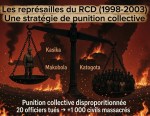
- Punition collective et terreur stratégique : les représailles disproportionnées du RCD/APR au Sud-Kivu
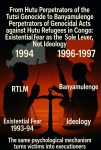
- From Hutu Perpetrators of the Tutsi Genocide to Banyamulenge Perpetrators of Genocidal Acts against Hutu Refugees in Congo: Existential Fear as the Sole Lever, Not Ideology
- The Psychological Engineering of Warriors: How the RPF Turned Banyamulenge Recruits into Instruments of War
- Des perpétrateurs hutu du génocide des Tutsi aux perpétrateurs banyamulenge des actes de génocide contre les réfugiés hutu au Congo : la peur existentielle comme unique levier, et non l’idéologie
 Journal d'idées
Mon cher Ivo:
Très bon article qui révèle tant de choses inconnues. Mais le texte existe en français et a dû en premier lieu être écrit en français: https://epoche.fr/2025/09/08/comment-les-ultranationalistes-ont-sabote-les-accords-de-minsk/ https://epoche.fr/2025/09/08/comment-les-ultranationalistes-ont-sabote-les-accords-de-minsk/ À propos, il fait allusion au livre de Benoit Paré intitulé « Ce que j’ai vu en Ukraine »: https://www.amazon.fr/que-jai-Ukraine-observateur-international/dp/B0F7FLR2Z4 https://www.amazon.fr/que-jai-Ukraine-observateur-international/dp/B0F7FLR2Z4 L’as-tu lu? Moi pas. C’est le genre de livre dont il faudrait faire la promotion dans le blog. Qu’en penses-tu?
Jean-Guy
>
J’aimeJ’aime